
Ice Cold Immersion
What a frozen Norwegian fjord taught us about cold, cardiac risk, and military medicine

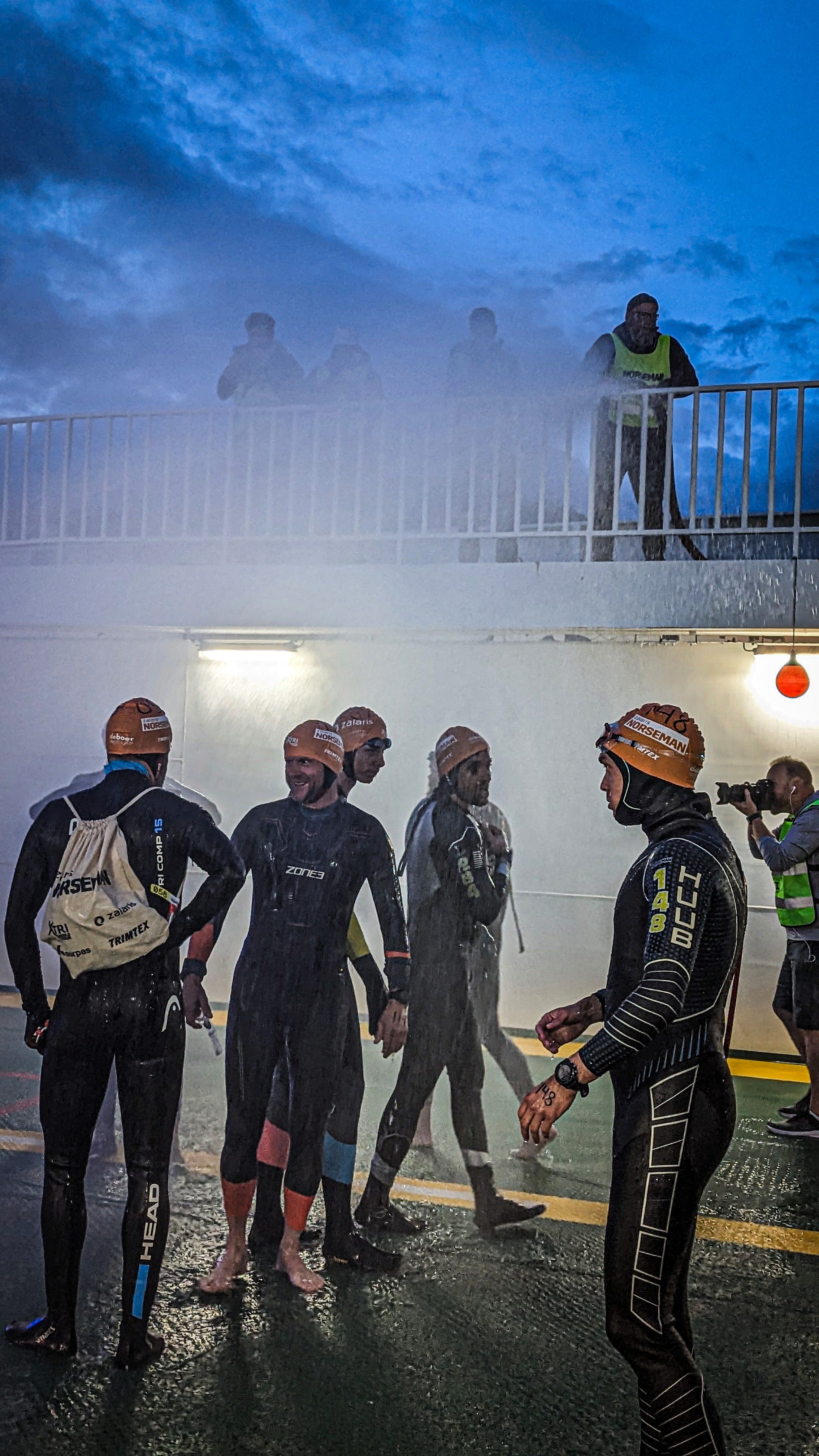
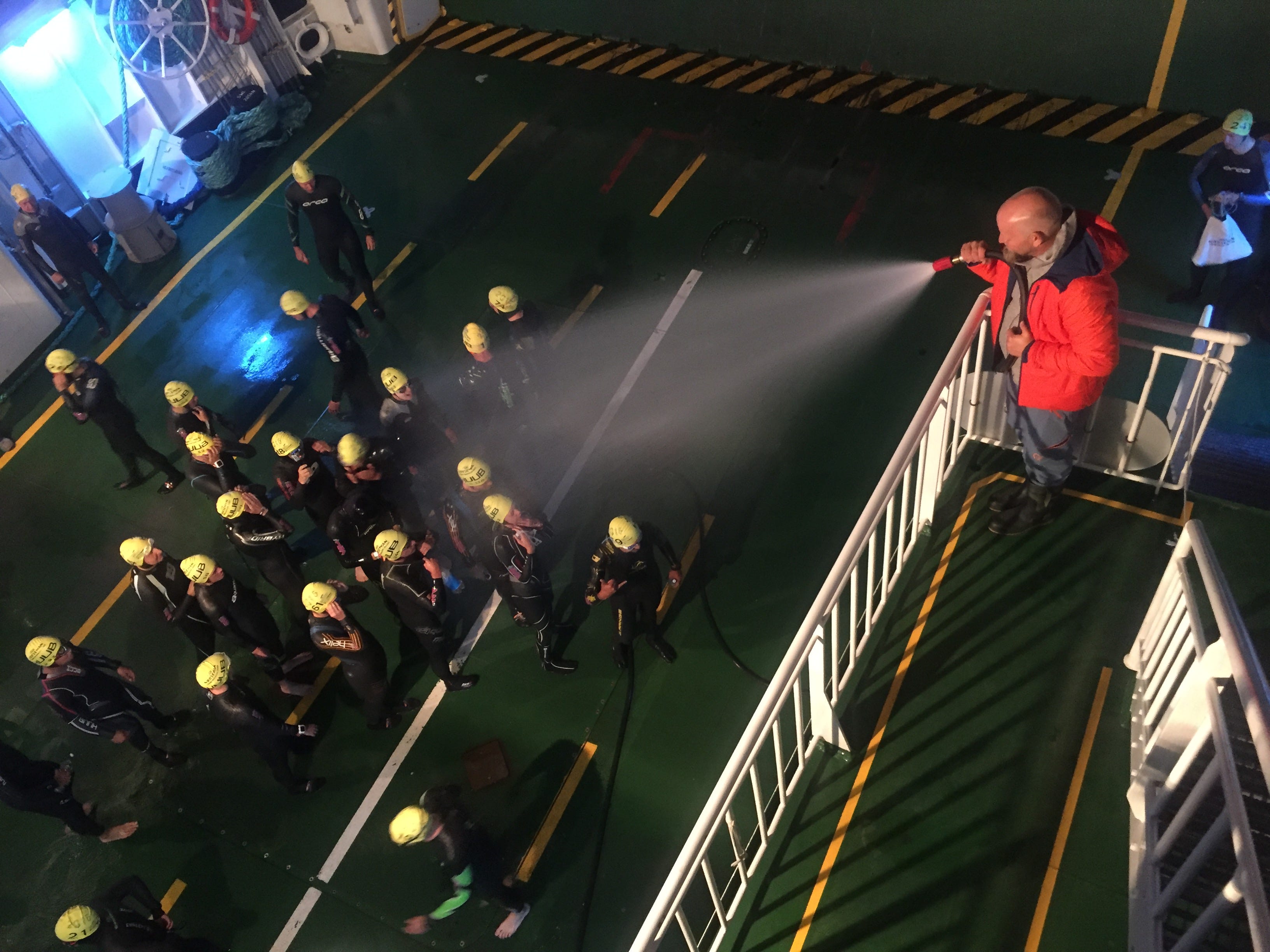
A few years ago I wrote a blog post on the Norseman website called “Spray and Pray.” The title referred to the moment before athletes jump from the ferry in the Hardangerfjord, when we drench them in ice-cold seawater before they hit the fjord. It makes for dramatic photographs. But the real reason we do it is grounded in physiology, and it is the same physiology that every military medic planning winter operations needs to understand before the first soldier steps onto the ice.
The physiological story starts with two reflexes that are both powerful and, crucially, opposed.
The cold shock response fires the moment cold water touches the skin. Heart rate surges. Blood pressure climbs. The body hyperventilates. Vasoconstriction increases cardiac afterload. In a healthy person this is alarming but manageable. In someone with an undiagnosed cardiac vulnerability, it can be the beginning of a catastrophic sequence.
The second reflex is the diving reflex, triggered when cold water contacts the face and nostrils — especially during breath-holding. This one pulls in the opposite direction, slowing the heart, redirecting blood to vital organs, and, critically, generating the conditions for arrhythmia. British scientists gave a name to what happens when both reflexes fire simultaneously: autonomic conflict.
When these two powerful and opposing signals collide in the same heart at the same moment, the electrical stability of the myocardium is genuinely threatened. For most healthy people, nothing catastrophic happens. But “most” is not the same as “all,” and the arrhythmia risk is not theoretical — it is the proposed mechanism behind a significant proportion of unexplained drowning deaths in cold water.
At Norseman we have been doing research since 2015, when we measured a water temperature of 9.8°C in the Eidfjord on race week and had to make a fast decision about whether 250 athletes should swim 3.8 km in it. They did not. We shortened the swim to 1.9 km, and the data we collected that day launched what became a multi-year research programme and ultimately my PhD thesis: Physiological changes following swimming in cold water in triathlon and military operations.
Over the following years our group collected core temperature data on athletes using ingestible telemetric capsules, measured lung function before and after racing, and published findings on core temperature dynamics, afterdrop, and the real-world challenge of knowing how cold someone actually is when their perception of their own temperature is unreliable. One consistent finding: people are poor judges of their own core temperature in cold-water environments, and the tools we typically use to measure it externally are often worse.
Which brings me to a paper just published in Frontiers in Physiology that every military medic preparing for winter operations should read.
Beres and colleagues followed 80 German Mountain Infantry soldiers through standardised ice-water self-rescue training in Norway — water at 0.5°C, air at −10°C. The soldiers wore standard field uniforms, used ski poles to haul themselves out, rolled in snow, and went back to training. The researchers attached ECG monitors, ran spirometry, and tracked core temperature throughout. The results are both reassuring and instructive.
The cardiac data confirms everything we have observed in the Norseman context, but in a more controlled military setting. ECG monitoring showed significant tachycardia post-immersion — median heart rate up 17 bpm — alongside a near-tripling of RR-interval variability, reflecting the simultaneous sympathetic and parasympathetic activation that defines autonomic conflict. Two participants showed ventricular extrasystoles during immersion. No sustained or malignant arrhythmias occurred. The cohort remained haemodynamically stable throughout. This is genuinely good news — and it broadly supports the position we have long held at Norseman, that supervised cold-water immersion in healthy, screened individuals can be conducted safely when proper medical oversight is in place. The lung function findings were similarly reassuring: no clinically significant changes in FVC, FEV₁, or peak expiratory flow, likely because the physical exertion of self-rescue triggered enough sympathetic activation to counteract any cold-induced bronchoconstriction.
But the absence of an event in a small study is not a guarantee. It is a data point.
This was a young, fit, pre-screened military cohort — a population about as favourable as any you will encounter. The literature is unambiguous that autonomic conflict can precipitate sudden cardiac death even in apparently healthy individuals. A soldier with an undiagnosed channelopathy, a borderline long-QT interval, or hypertrophic cardiomyopathy that passed a routine fitness check represents a very different risk calculation. These conditions do not announce themselves. And when ventricular fibrillation occurs at the edge of a frozen lake in −10°C air, the treatment window is measured in minutes.
Ice-water self-rescue training should therefore be treated with the same medical seriousness as any other high-physiological-stress activity where the risk of a shockable rhythm is non-trivial. That means an AED on site — not in a tent 400 metres away — with personnel trained in its use, and a clear emergency action plan in place before the first soldier enters the water. This is not catastrophising a training activity that the evidence supports as safe for healthy troops. It is recognising that the gap between “safe in this cohort” and “safe in every individual” is exactly where sudden cardiac death lives.
The temperature findings in the Beres study also deserve attention, particularly for those of us who have spent time measuring core temperature in cold environments. Tympanic thermometers — standard issue across most armed forces — significantly underestimated true core temperature post-immersion, by a median of 2.8°C. Occluding the ear canal with a standard military earplug made no meaningful difference. In practice this means the ear thermometer in your kit may tell you a normothermic casualty is hypothermic, driving unnecessary treatment escalation, MEDEVAC decisions, and potentially ECMO referral discussions — all based on a number that is simply wrong. This aligns with what we found in our own Norseman work: people’s perception of their own temperature is unreliable, the tools we use to measure it externally are often unreliable, and the ingestible capsule — while logistically demanding — provides data that ears and assumptions cannot. Clinical staging using the Revised Swiss System remains the practical fallback in the field when invasive measurement is not available.
The lesson across both contexts — the fjord at Eidfjord and the frozen lake in Norway where the NATO soldiers train — is the same one that took me years of race-day experience and a PhD to fully articulate. Cold-water immersion is survivable and trainable. The physiology is manageable in healthy people with proper preparation and oversight. But it demands respect. The spray on the Norseman ferry exists because a possible cardiac event on the deck of a ferry is dramatically more manageable than one in dark fjord water at 5 in the morning. The defibrillator at the edge of the training lake exists for the same reason. You might never need it. But the one time you do, nothing else will matter.
Review your medical plan. Put the AED at the water’s edge.
📄 Beres et al. (2025), Frontiers in Physiology — open access.
📄 Melau et al. (2019) and Hoiseth et al. (2021) — core temperature studies from the Norseman research programme.
🔗 Spray and Pray — nxtri.com/research-blog/spray-and-pray
This newsletter represents my personal views and does not necessarily reflect the opinions of my employer or any organizations. I have no affiliations with any companies relevant to this.
If you find this interesting and want to support my work, consider selecting the monthly paid option.
Fascinating read - thanks for sharing your experience with us.