

Beyond Hypothermia
August 2026 newsletter. A quiet Norseman, a paper I have wanted to write for a long time, and a new set of mats to learn on.

It has been an incredibly busy summer. Norseman is finally behind us, the fjord has gone back to being a fjord, and the work turns into the slower kind.
This month one idea kept turning up in four different places. In a race report, in a review paper on cold water drowning, on a jiu-jitsu mat, and in a small study on warm water swimming. The idea is this. The obvious cause is usually the wrong one. The thing we assume killed someone, or hurt them, or protected them, is very often not the thing that did it.
Norseman 2026, the year the Viking Gods left us alone
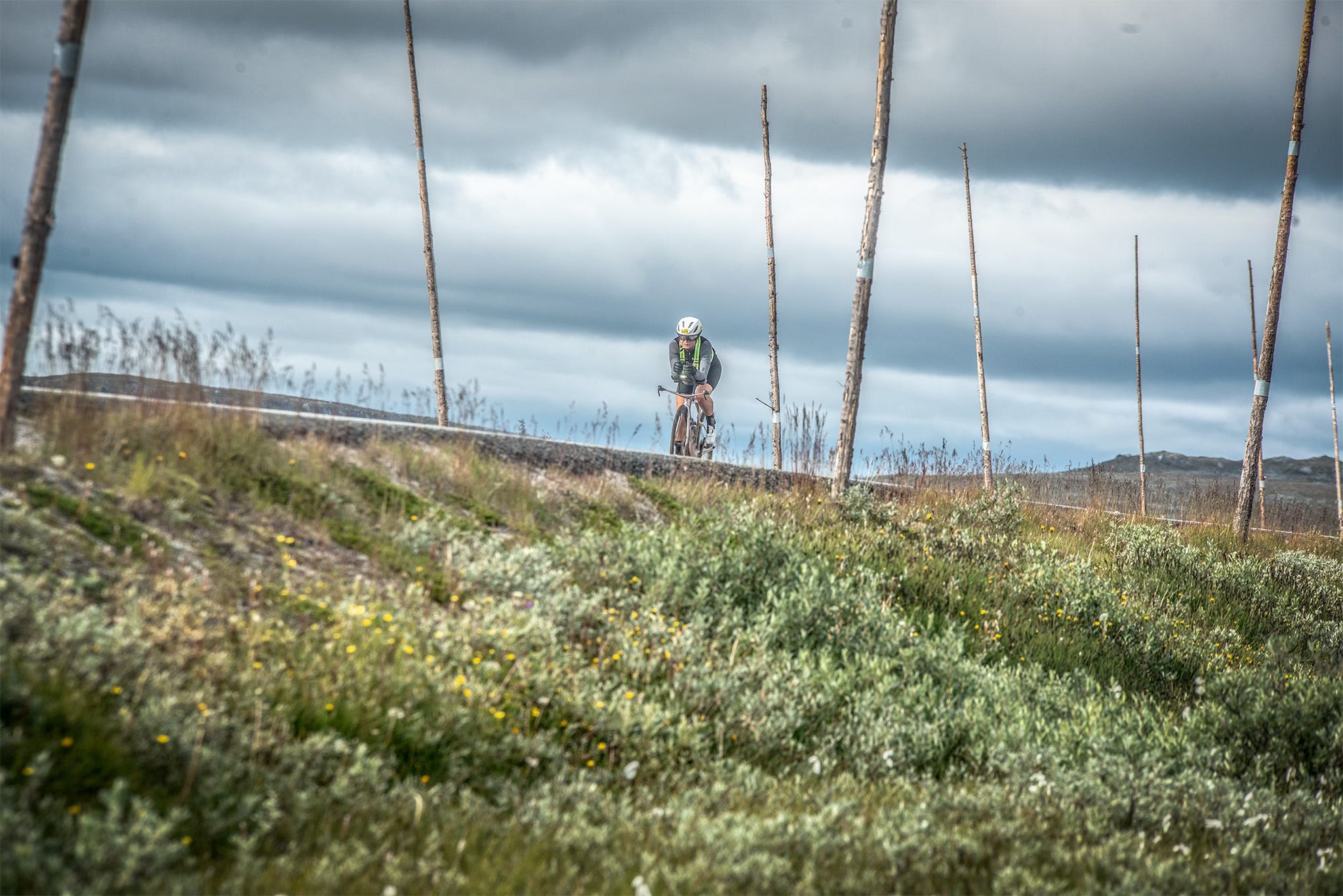
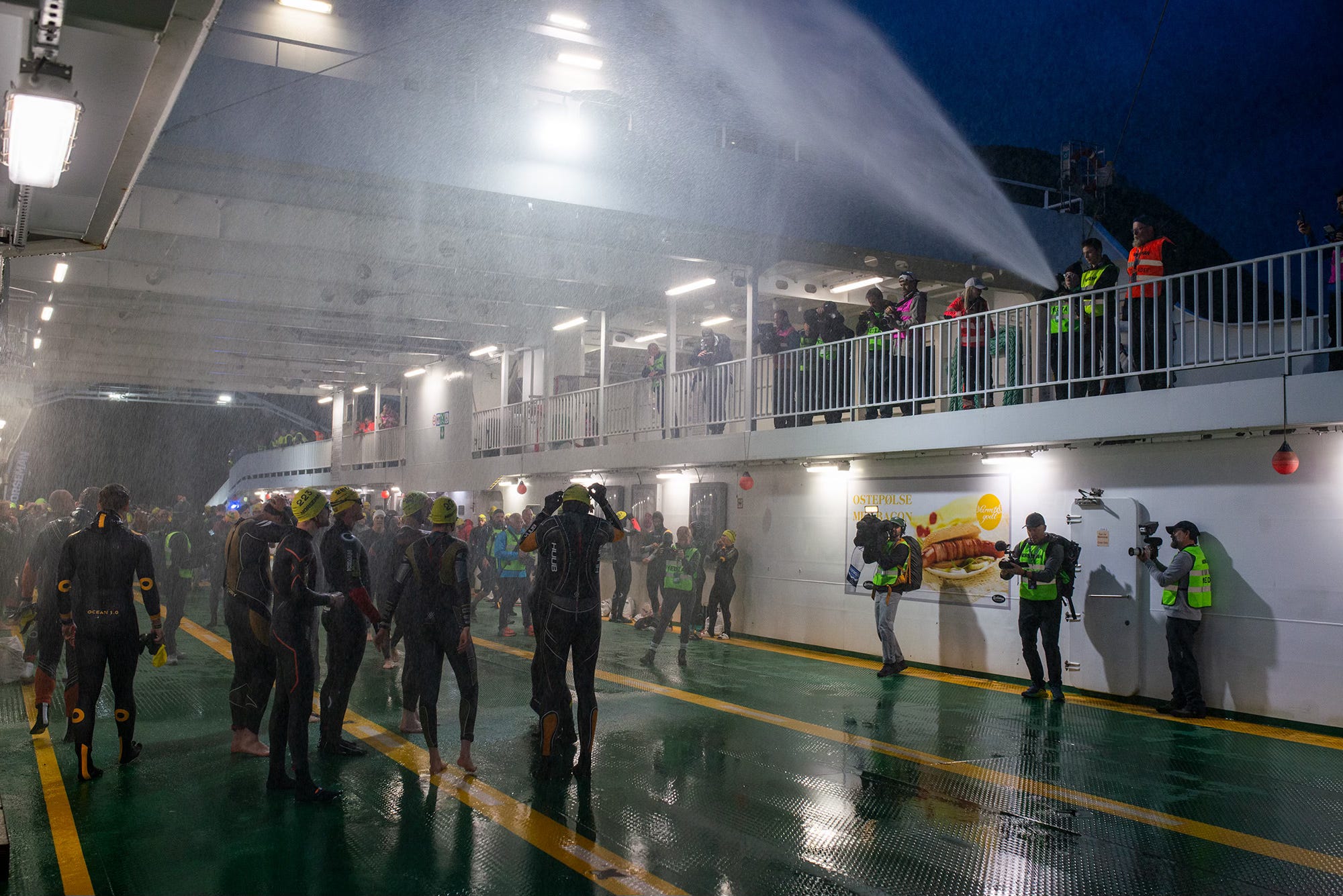
This year the weather behaved. 255 athletes started, the fjord sat at around 14°C, the mountain stayed open, and the day unfolded more or less the way it looks on paper. No thunderstorms, no white out, no shortened swim.
We treated approximately ten patients. A few cardiac concerns and some minor trauma, nothing that turned into an incident. A good share of them, as always, were support crew rather than athletes. That pattern has held for years and it still says the same thing. The athlete is tapered, fed and watched over by an entire organisation. The support crew has been awake since three in the morning, driving a strange road in a strange country, thinking about somebody else all day. Then they get tired and something small happens.
What actually worries me now is not the water. It is the traffic. Support cars stopping badly on narrow Norwegian roads, with tired athletes and other traffic coming through, is the most dangerous thing on our course. Our 13 race marshals on motorbikes and the police presence made a real difference.
I wrote the full report a few days ago, including the heat plan we built for the valley and then did not need. If you want the detail, it is here.
What we were actually measuring
The part I did not write much about in that report is the research, so let me do it here.
Alongside the safety and medical work, we ran another season of blood sampling and lung function testing on our athletes. This is not a one-off study. It continues a cohort our research group has been building at Norseman over many years, and that is the whole point of it. A single race gives you a snapshot. Many years of the same measurements, on the same course, across cold years and warm years and one shortened swim, gives you something you cannot get in a laboratory. No ethics committee will ever let you design this from scratch.
The questions we keep returning to are the ones that matter on the pier at Eidfjord. What happens to the lungs after a cold swim, and who is at risk of swimming-induced pulmonary oedema. What the blood of a finisher tells us about how the heart has been loaded across a day like this. How core temperature actually behaves in a wetsuited swimmer in cold open water, which is the question that started all of this for me in 2015.
I will not put numbers here, because the data is not ready and I am not going to guess in public. But this is the work that quietly informs every call I make on race morning.
The paper: beyond hypothermia
Now the thing I am most proud of this month.
Together with Laura Leuci, Antonio Messina, Mike Tipton and Luca Carenzo, I have published a narrative review in the Journal of Applied Physiology titled Beyond hypothermia: mechanisms of death, rescue, and prevention in cold water immersion.
It is the paper I have wanted to see written for years, because it takes on a misconception that is still everywhere, including among people who should know better. Cold water does not usually kill you by making you cold.
Here is the number that should stop you. In the United Kingdom, around 55% of accidental open water deaths happen within three metres of safe refuge, and two thirds of the victims are regarded as competent swimmers. You cannot explain that with hypothermia. A competent swimmer three metres from safety does not die of core cooling. Something else got them first, and it got them fast.
The review works through the whole four-stage model of immersion, because the sequence is the point. Here it is.
Stage 1, the cold shock response, 0 to 3 minutes. An involuntary gasp of 2 to 3 litres in the first seconds, then one to three minutes of hyperventilation you cannot easily override. If your airway is under water when the gasp comes, the drowning process has already started. If it is not, the hyperventilation drops your arterial CO2 and reduces cerebral blood flow. Breath hold time falls from around 60 seconds to a few. In the UK, roughly 60% of people who die in cold water die in stage 1 or 2, without ever becoming hypothermic.
Stage 1 is also where autonomic conflict sits. Cold skin drives the sympathetic system hard while facial immersion drives the parasympathetic diving response, and the heart receives both instructions at once. We are careful to call this plausible rather than proven, and the evidence suggests it needs a pre-existing substrate to become lethal. Which brings in the channelopathies. Long QT syndrome affects around 1 in 2,000 people, and studies have found pathogenic or likely pathogenic cardiac channel mutations in roughly a third of unexplained drowning cases. Drowning may sometimes be the first presentation of an inherited arrhythmia syndrome, particularly in children and young adults.
Stage 2, swimming failure, 3 to 30 minutes. As the cold shock subsides, the limbs cool. Peripheral nerve conduction slows in step with tissue temperature, muscle loses rate of force development and peak force, and manual dexterity falls apart once finger skin temperature drops below about 15°C. Tactile sensitivity is largely gone below about 8°C. In near-freezing water you cross those thresholds within minutes, which means you can lose the ability to hold on to a rescue line before your core temperature has moved at all. This is also where swimming-induced pulmonary oedema belongs.
Stage 2 carries a forensic trap worth knowing about. A victim who drowns here may be found with a near-normal core temperature at post-mortem, which invites the conclusion that cold water played no part. It did. And one detail from this section is uncomfortably close to home: analysis of triathlon fatality data shows most deaths occur during the swim, often within the first few hundred metres. That timing fits cold shock, autonomic conflict and SIPE. It does not fit hypothermia or exhaustion.
Stage 3, hypothermia, beyond 30 minutes. Only now does core cooling become the main threat. Shivering peaks between 34 and 30°C and then fails. Consciousness clouds below about 33°C and is usually lost between 30 and 28°C. The Osborn wave appears below 32°C, and the risk of ventricular fibrillation climbs below 28°C.
The famous recoveries are real. People have been resuscitated with good neurological outcome from core temperatures of 13.7°C, and later 11.8°C, after hours of cardiac arrest. But those cases are quoted in the wrong direction all the time. Neither victim was submerged in cold open water, and in both the cooling came before the arrest. In most cold water drowning deaths it is the other way round: the person aspirates, arrests from hypoxia while still relatively warm, and cools afterwards. So the question that matters at the scene is not how cold the patient is. It is which came first, the cold or the hypoxia.
Stage 4, circum-rescue collapse. People die at the moment of rescue, and we have been teaching the wrong reason for it. Afterdrop is real but modest, typically 0.5 to 1.5°C, and is no longer considered the main mechanism. The bigger one is the abrupt loss of hydrostatic pressure. Water squeezes 500 to 700 mL of blood centrally while you are immersed. Lift someone vertically out of it, especially on a helicopter winch, and that squeeze disappears in a cold, volume-depleted body whose vessels can no longer respond. Cardiac output can fall off a cliff. This is the physiological argument behind horizontal extraction, and it is a much stronger one than afterdrop ever was.
One line I would like every emergency clinician to carry with them. Fewer than 10% of drowning cardiac arrests present in a shockable rhythm. So if you find one, that is atypical, and it should make you ask whether a primary cardiac event put the person in the water rather than the other way around.
And the prevention that follows from all of this is almost absurdly simple. Float. The RNLI Float to Live campaign works because cutaneous cold receptors adapt over the first 60 seconds or so. Anyone who can keep their airway clear of the water for 60 to 90 seconds gets their breathing back. Not because they are hardened. Because the physiology settles.
The mats
Part of what has made this summer busy is something I have not written much about here. I have been training Brazilian Jiu-Jitsu for a year and a half now, and I enjoy it more than I expected to.
I have spent twenty years being the person on the pier who knows things. On the mat I am the one getting comprehensively dismantled, several times a week, by people half my age and often half my size. A year and a half in, I am still very much near the bottom of that ladder, and it turns out that is excellent for a person. Learning something hard from the beginning sharpens your thinking in a way that reading does not.
It also hands you a new set of physiological questions, which was not the plan. So a paper by Alberto Labra and Daniel Niño-de-Rivera-García landed at exactly the right moment: a systematic review in Nortis Journal of Sports Sciences on chokes in grappling and mixed martial arts.
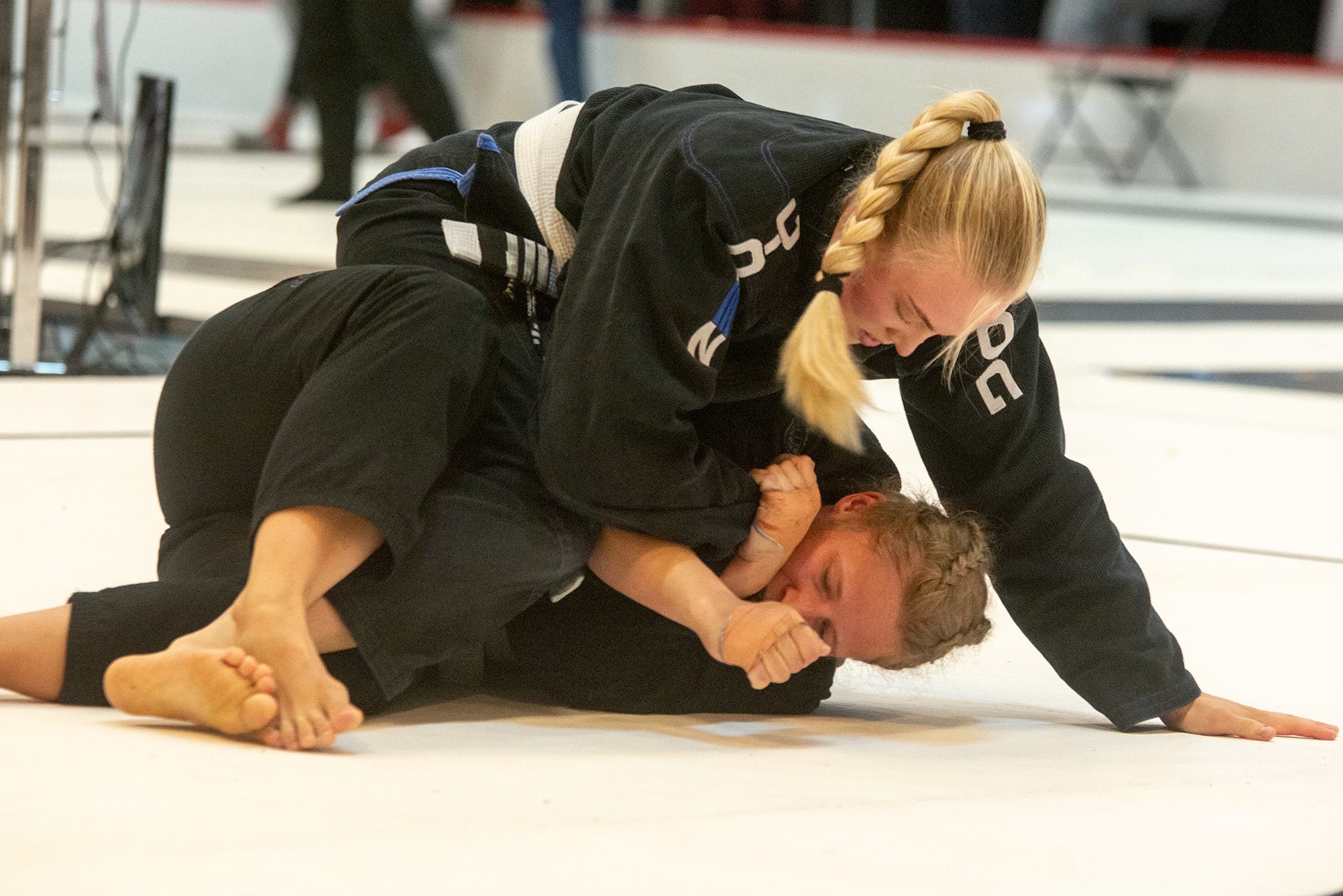
What struck me is how familiar the physiology felt. Most sport chokes are not chokes at all in the medical sense. They are vascular strangulations. Compress the carotid arteries and jugular veins, cerebral perfusion pressure falls below what the brain can autoregulate around, generally under 50 mmHg, and consciousness goes in less than ten seconds. Medically it looks far more like syncope than like a head injury. The rear naked choke alone accounts for 49.1% of choke finishes in UFC history, and five techniques account for 89.4% of them.
The comparison with striking is the interesting part. Repetitive head impacts have a well-established link to chronic traumatic encephalopathy. Transient strangulation, so far, does not. More surprising still, elite BJJ athletes show elevated resting global cerebral blood flow, roughly 741 mL per minute against 573 in matched controls, with well-preserved cognition despite an average of more than 3,500 choke exposures across a career. The authors discuss ischemic preconditioning as a possible explanation. A brain that has learned to tolerate brief interruptions in supply.
That is not a licence to be casual. The review is clear that cervical artery dissection and ischemic stroke are documented, sometimes after maneuvers that did not look forceful, and that in one survey 55.7% of BJJ athletes reported symptoms consistent with dissection at some point. Respiratory chokes, applied to the trachea rather than the vessels, risk structural laryngeal injury. The warning signs are the worst headache of your life, focal neurological deficits, speech or visual changes, persistent neck pain, hoarseness or difficulty swallowing.
The practical version for the mats is short. Tap early. Release immediately. And if something feels wrong in your head or your neck afterwards, do not wait it out.
A friend, a wetsuit, and warm water
The last item goes to the opposite end of the thermometer.
John Mercer at the University of Nevada, Las Vegas has published a brief report with Katsiaryna Afanasyeva and colleagues in the International Journal of Exercise Science on core temperature in triathletes swimming in warm open water, with and without a wetsuit. John is a friend, and he has raced Norseman, which means he has personally experienced the exact opposite of the conditions he studied here.
Four triathletes, two 700 m open water swims each, in water between 27.9 and 28.3°C, with core temperature logged every 15 seconds by ingestible pill. They swam faster in the wetsuit. But the change in core temperature was no different between conditions, and nobody came close to hyperthermia.
The finding I liked most is the variability. When they extrapolated each individual’s temperature trend forward to 39°C, the estimated time to reach a hyperthermic state ranged from 19 minutes to 137 minutes. Same water, same distance, same protocol, and a sevenfold spread between people. That is the argument for individual measurement, compressed into one number.
It is four participants and a short swim, and the authors say so plainly. But it is careful work on a question that matters for race rules, and I was pleased to find two of our papers among its references.
Next: the Skagerrak
The next cold water project is a swim crossing the Skagerrak, from Denmark to Norway. Open water and a long way over. More on that soon. It starts in just a few days. .
So that was a very full summer. A quiet race that we were ready for anyway, a paper arguing that we have been blaming the wrong mechanism for decades, a year and a half of learning to tap early, and a friend measuring core temperature in water warm enough to swim in without a wetsuit.
Four different subjects, one shared lesson. Do not assume the mechanism. Measure it.
A Few Books, If You Want to Read On
A good deal of this issue lives in cold water, so if any of it caught your interest, I have written some short, science-based books you might enjoy.
Cold Water Swimming: A Mini Book is a friendly, short guide to enjoying cold water safely, confidently, and with a big smile. It draws on years at the Norseman Xtreme Triathlon, research with elite military swimmers, and my published work in cold-water physiology. Calm, clear, trustworthy guidance for anyone curious about stepping in.
Get Cold Water Swimming on Gumroad →
This newsletter represents my personal views and does not necessarily reflect the opinions of my employer or any organizations. I have no affiliations with any companies relevant to this.
I’d love for you to join my Substack blog! You can enjoy all my newsletters for free, and I promise to keep it that way.
If you find this interesting and want to support my work, consider selecting the paid option.
Thanks for reading. If something here resonated, hit me with a reply.